 nurbook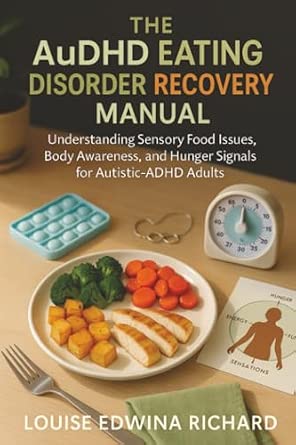
The AuDHD Eating Disorder Recovery Manual: Understanding Sensory Food Issues, Body Awareness, and Hunger Signals for Autistic-ADHD Adults
Author(s): Louise Edwina Richard (Author)
- Publisher: Neurotype Publishing
- Publication Date: 12 Nov. 2025
- Language: English
- Print length: 158 pages
- ISBN-10: 1923646257
- ISBN-13: 9781923646254
Book Description
Eating shouldn’t be this hard. But when you’re autistic with ADHD (AuDHD), every meal becomes a challenge no one seems to understand.
Do you forget to eat for hours, only to feel nauseous when you finally remember? Do certain food textures make you gag, limiting your diet to a few “safe” foods? Does meal planning feel impossible, and do you struggle with hunger signals that never seem clear?
Traditional eating disorder treatment wasn’t designed for neurodivergent brains—and that’s why it keeps failing you.
This guide reveals why standard approaches don’t work for AuDHD women and provides practical, neurodiversity-affirming strategies that actually help.
Inside, you’ll discover:
Why interoception deficits make “listening to your body” impossible and what to do instead
How sensory processing differences create genuine food aversions (not psychological fears)
Why ADHD executive dysfunction turns meal planning into an overwhelming black hole
How anxiety and nervous system dysregulation shut down hunger signals
The difference between autistic food neophobia and eating disorder fear foods
Mechanical eating approaches for days when body signals disappear
How to build external eating structure that compensates for time blindness and poor interoception
Strategies for expanding your food repertoire while respecting sensory limits
Why hyperfocus leads to 12-hour accidental fasting and how to interrupt the pattern
How to work with (not against) your need for sameness and routine
Social eating anxiety solutions that actually account for autistic challenges
What recovery looks like when you’ll always need accommodations
This isn’t another book telling you to “honor your hunger” or “eat intuitively” when your body’s signals are unreliable. This is a comprehensive framework built specifically for autistic ADHD brains dealing with interoception deficits, sensory sensitivities, executive dysfunction, alexithymia, and the unique eating challenges that come with being neurodivergent.
You’ll learn to create sustainable eating systems using alarms, schedules, predetermined portions, and mechanical eating—permanent accommodations that respect your neurology rather than fight against it.
Chapters include:
Understanding the AuDHD-eating disorder connection and why traditional treatment fails
The hidden eighth sense (interoception) and why you can’t trust your body’s signals
When food textures trigger fight-or-flight responses
ADHD medication effects on appetite and the meal-planning black hole
Autistic rigidity, safe foods, and when sameness becomes problematic
The polyvagal theory explanation for anxiety-driven appetite suppression
Building your sensory-informed eating framework with practical daily strategies
Challenging food rules and fear foods without triggering rigidity
Finding neurodivergent-affirming providers and advocating for appropriate treatment
Perfect for:
Autistic women with ADHD struggling with eating, food anxiety, or restrictive patterns
Those diagnosed with ARFID, anorexia, or binge eating disorder who haven’t responded to standard treatment
Neurodivergent individuals with severe food selectivity or sensory-based eating challenges
People who’ve been told they’re “picky eaters” but know it’s more complex
Anyone seeking eating strategies that work with neurodivergent brains, not against them
Recovery for AuDHD women looks different than neurotypical recovery—and that’s not just okay, it’s expected. This guide shows you how to nourish yourself adequately while honoring your neurodivergent needs.
{“@context”:”https://schema.org”,”@type”:”Book”,”name”:”The AuDHD Eating Disorder Recovery Manual: Understanding Sensory Food Issues, Body Awareness, and Hunger Signals for Autistic-ADHD Adults”,”image”:”https://m.media-amazon.com/images/I/41o5DuR6FkL._SY445_SX342_ML2_.jpg”,”author”:{“@type”:”Person”,”name”:”Louise Edwina Richard (Author)”},”publisher”:{“@type”:”Organization”,”name”:”Neurotype Publishing”},”datePublished”:”12 Nov. 2025″,”isbn”:”9781923646254″,”numberOfPages”:158,”inLanguage”:”English”,”description”:”Eating shouldn’t be this hard. But when you’re autistic with ADHD (AuDHD), every meal becomes a challenge no one seems to understand.Do you forget to eat for hours, only to feel nauseous when you finally remember? Do certain food textures make you gag, limiting your diet to a few \”safe\” foods? Does meal planning feel impossible, and do you struggle with hunger signals that never seem clear?Traditional eating disorder treatment wasn’t designed for neurodivergent brains—and that’s why it keeps failing you.This guide reveals why standard approaches don’t work for AuDHD women and provides practical, neurodiversity-affirming strategies that actually help.Inside, you’ll discover:Why interoception deficits make \”listening to your body\” impossible and what to do insteadHow sensory processing differences create genuine food aversions (not psychological fears)Why ADHD executive dysfunction turns meal planning into an overwhelming black holeHow anxiety and nervous system dysregulation shut down hunger signalsThe difference between autistic food neophobia and eating disorder fear foodsMechanical eating approaches for days when body signals disappearHow to build external eating structure that compensates for time blindness and poor interoceptionStrategies for expanding your food repertoire while respecting sensory limitsWhy hyperfocus leads to 12-hour accidental fasting and how to interrupt the patternHow to work with (not against) your need for sameness and routineSocial eating anxiety solutions that actually account for autistic challengesWhat recovery looks like when you’ll always need accommodationsThis isn’t another book telling you to \”honor your hunger\” or \”eat intuitively\” when your body’s signals are unreliable. This is a comprehensive framework built specifically for autistic ADHD brains dealing with interoception deficits, sensory sensitivities, executive dysfunction, alexithymia, and the unique eating challenges that come with being neurodivergent.You’ll learn to create sustainable eating systems using alarms, schedules, predetermined portions, and mechanical eating—permanent accommodations that respect your neurology rather than fight against it.Chapters include:Understanding the AuDHD-eating disorder connection and why traditional treatment failsThe hidden eighth sense (interoception) and why you can’t trust your body’s signalsWhen food textures trigger fight-or-flight responsesADHD medication effects on appetite and the meal-planning black holeAutistic rigidity, safe foods, and when sameness becomes problematicThe polyvagal theory explanation for anxiety-driven appetite suppressionBuilding your sensory-informed eating framework with practical daily strategiesChallenging food rules and fear foods without triggering rigidityFinding neurodivergent-affirming providers and advocating for appropriate treatmentPerfect for:Autistic women with ADHD struggling with eating, food anxiety, or restrictive patternsThose diagnosed with ARFID, anorexia, or binge eating disorder who haven’t responded to standard treatmentNeurodivergent individuals with severe food selectivity or sensory-based eating challengesPeople who’ve been told they’re \”picky eaters\” but know it’s more complexAnyone seeking eating strategies that work with neurodivergent brains, not against themRecovery for AuDHD women looks different than neurotypical recovery—and that’s not just okay, it’s expected. This guide shows you how to nourish yourself adequately while honoring your neurodivergent needs.”,”url”:”https://www.amazon.co.uk/dp/1923646257/”,”bookFormat”:”http://schema.org/EBook”,”additionalType”:”http://schema.org/PDF”,”fileSize”:”57 MB”,”accessibilityFeature”:[“login required”,”member access only”],”accessibilitySummary”:”PDF version available to authenticated members only. File size: 57 MB.”}

